 Netwrck
Gothic Fantasy.
The First Crossing
Every bridge in Saint Orra carried a promise carved into its keystone. Keep a child safe. Pay what was owed. Return before winter. The town measured devotion in stone, but it measured doubt in the spaces between the arches.
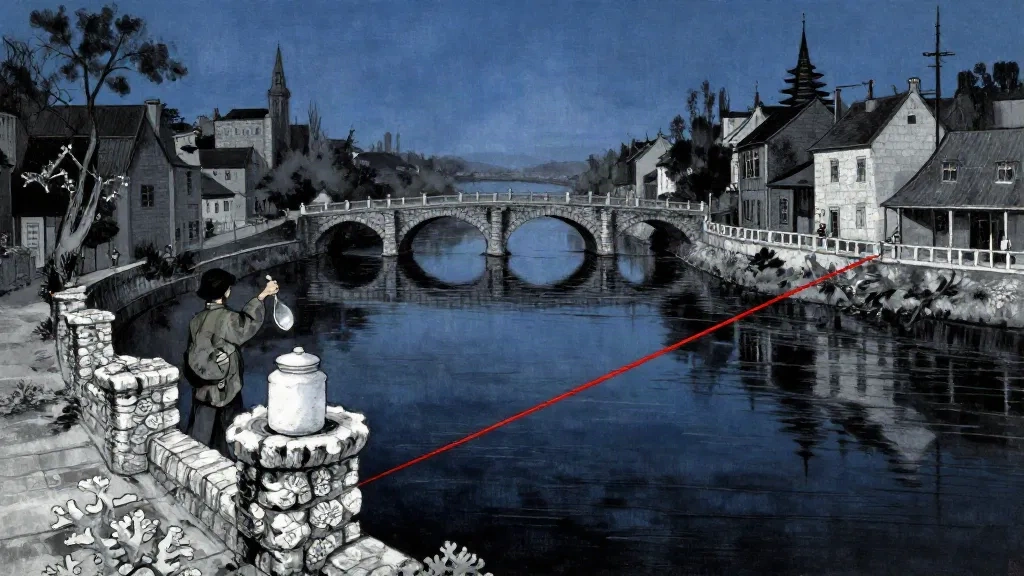
Elian Vey was a river surveyor. She charted the movement of feelings across water: grief moved in dark eddies, hope in pale seams, resentment in the sharp current beneath bridges where someone had broken their word. Her instruments were a silver spoon, polished until it reflected no face, and a salt jar, whose crystals recorded the small silences left by human voices.
On the morning of the first thaw, Elian stood beside the Orrin Bridge, the oldest crossing in town. Her father had built it thirty years earlier, after promising her mother he would never leave the southern bank. He had broken that promise on the night Elian was born.
She lifted the spoon over the water. The river showed a red thread crossing its black surface, running from one stone pier to the other.
Every bridge is a promise. Every river is a witness.
Elian marked the thread in her notebook. It was not a feeling, exactly. It was an obligation that had outlived the person who made it.
The River Opens Its Ledger
By noon, the river had risen beneath Orrin Bridge. It carried splinters, wedding ribbons, ration tokens, and a child’s shoe filled with rainwater. As Elian walked downstream, she saw the records of every bridge in Saint Orra moving beneath the surface: the swallowed vows of founding families, the promises made by lovers, the bargains struck between merchants and the dead.
At each crossing, she placed a pinch of salt on the spoon. The river spoke through its ripples. A flooded mill spoke of broken wages. A stone footbridge trembled with the memory of a pardon never granted. The deeper she walked, the more the water seemed to resent being named.
Then the current brought her a piece of blackened timber bearing her father’s initials.
Elian dropped the spoon. It struck the water without a sound. When it rose, the river showed two bridges overlapping: Orrin Bridge as it existed now, and another bridge built beneath it from pale bones.
Her mother had not drowned. Orrin Bridge had been made over the chamber where she was buried alive.
A Public Shape
The story lived in the town’s oldest register, locked beneath the assessor’s office. Elian went there after dusk with the salt jar beneath her coat. The assessor, a dry man with ink-stained fingers, refused to let her read the page naming her mother.
“The river keeps those records,” he said.
“Then let it speak in the square.”
He stared at her as though she had proposed burning the bridge.
Elian had spent years making her maps private. She had measured other people’s shame at the edge of the page and folded it shut before anyone could recognize it. Her desire had been small and defensible: to turn her ritual into a public act, to make the town see what it had chosen not to name.
Now the river had shown her the cost of that silence.
She took the register from the desk, opened it beneath the office window, and scattered salt across the blank margin. The spoon followed, laid over the black ink. Outside, the river lifted against the embankment.
The Red Thread
By morning, the water had entered the square. It rose through the gutters, curled around the bridge footings, and carried a red thread across every surface: the doors, the benches, the assessor’s windows, the sleeping faces beneath their blankets.
People woke with salt in their mouths. Some remembered the promises they had broken. Some remembered the ones they had never made.
Elian stood on Orrin Bridge. The buried chamber gurgled below. She could have cut the thread and let the river keep its silence. Instead she raised the silver spoon and held it over the water.
Her own feeling appeared: not grief, not anger, but the fierce clarity of someone who had finally stopped asking the river to forgive her.
Then she called the town together.
“My father built a bridge over my mother,” she said. “This is the promise it kept, and the promise it buried.”
The river did not punish them. It simply opened its ledger, page after page, until Saint Orra had to read.
By sunset, workers began removing the stones from Orrin Bridge. Elian stood on the exposed bank, spoon in one hand, salt jar in the other. Beneath them, the river shone white coral and ink, crossed by one red thread. It did not promise what would come next. It only bore witness, patiently, until someone chose to answer.





