 Netwrck
Hopeful Science Fiction.
The Measure of Moving Water
Mara kept her instruments in a narrow case beside the bridge tender’s office: a copper wheel, three silver funnels, and a compass whose needle trembled whenever someone nearby made a promise. Her work was called emotional surveying, though the town preferred to say she watched the weather.
Rivers carried feelings without becoming them. Fear moved downstream in dark eddies. Hope traveled in bright threads beneath the surface. Anger left a warm metallic taste on the stones. Mara mapped each current on translucent vellum, then folded the maps into a drawer no one was permitted to open.
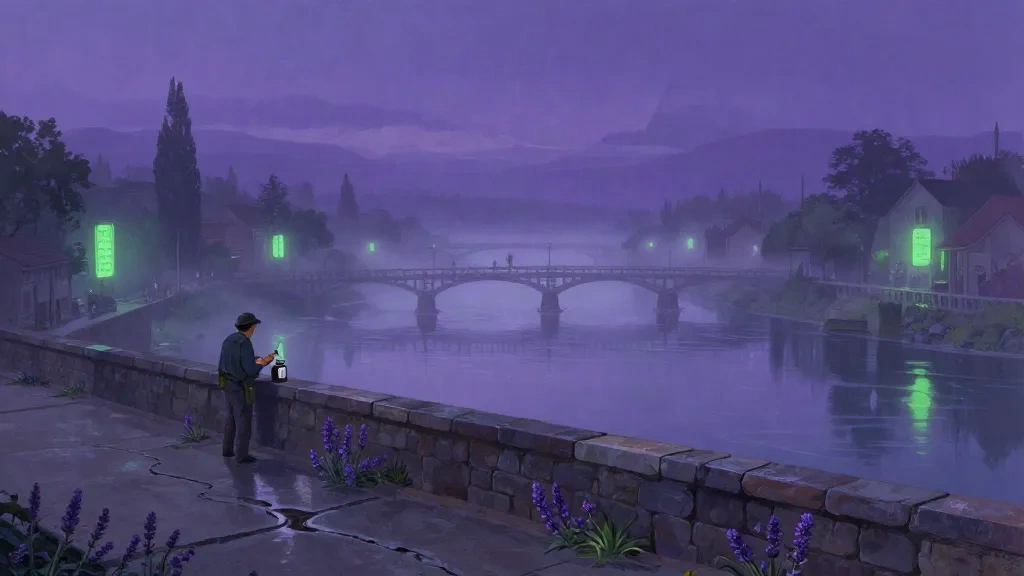
Every dusk, she performed a private ritual. She drew a silver spoon of river water into a small jar, added one pinch of salt, and placed both on the newest bridge’s western rail. The salt made the water shine. The spoon made the water speak: a faint silver note that only people carrying unspoken promises could hear.
It was not enough, Mara thought. The town had a bridge for every departure, every marriage, every argument resolved, and every promise broken. Yet the river treated them alike. She wanted to make her ritual public—not as a spectacle, but as an honest way for neighbors to measure what they carried before they asked the river to carry it for them.
The River’s Record
On the first morning of autumn, the river began returning the bridges.
Not as ruins. The water lifted images from its depth: a timber crossing trembling beneath soldiers’ boots, a stone bridge shining with wedding lanterns, a footbridge built by children who wanted to escape a flood. Each image carried the emotions of its builders. Fear passed like cold rain. Pride glimmered green. Grief sank in violet strands.
Mara walked along the bank with the silver spoon in one hand and the salt jar in the other. Her maps would not hold these records. The river had begun altering its banks. The western rail of the newest bridge bent toward the water, and beneath it, hundreds of silver notes sounded at once.
“You are showing me the past,” she said.
The river answered by sending a wave across the stones. It revealed the town’s first bridge, built jointly by two rival families after the flood. The promise beneath it had been simple: neither family would claim the other’s land while the water rose.
No one living remembered the agreement. The river did.
The Public Crossing
Mara called the town to the bridge at sunset. Some came because the river had changed. Others came because her instruments had finally appeared above the waterline. She stood where the two old roads met and held up the silver spoon.
“This is a measurement,” she said. “Not a verdict. Put one true promise into the water.”
No one moved. The river played the memory of the flood, and the bridge shone with the wet asphalt gray of a storm. Pharmacy signs across the river cast a green glow over the crowd.
Then Mara’s sister stepped forward. She had spent years promising their father she would leave the town. She filled the spoon with river water, touched it to the salt, and struck the rail.
The note carried upstream. It gathered old grief, old courage, and the small bright thread of a promise finally spoken. The bridge straightened. A second person followed, then another. Some promises were practical: pay the debt, open the school, return the borrowed boat. Some were frightened: forgive me, stay one more night, tell the truth.
The river did not judge them. It measured them, then let the current carry each promise beyond the town.
A Public Act
By morning, the bridge had changed. New joints had tightened in its stone. A line of lavender flowers had opened along the cracks, though the season was wrong for lavender. The town placed its own records beside Mara’s maps: names, dates, reasons, all witnessed by the river.
She kept her private ritual, but no longer kept it private. At every new bridge, anyone could bring a spoon and a jar of salt. The water would listen. The town would remember. And no promise would need to cross alone.





