 Netwrck
Fairy-Tale Fiction.
The First Note
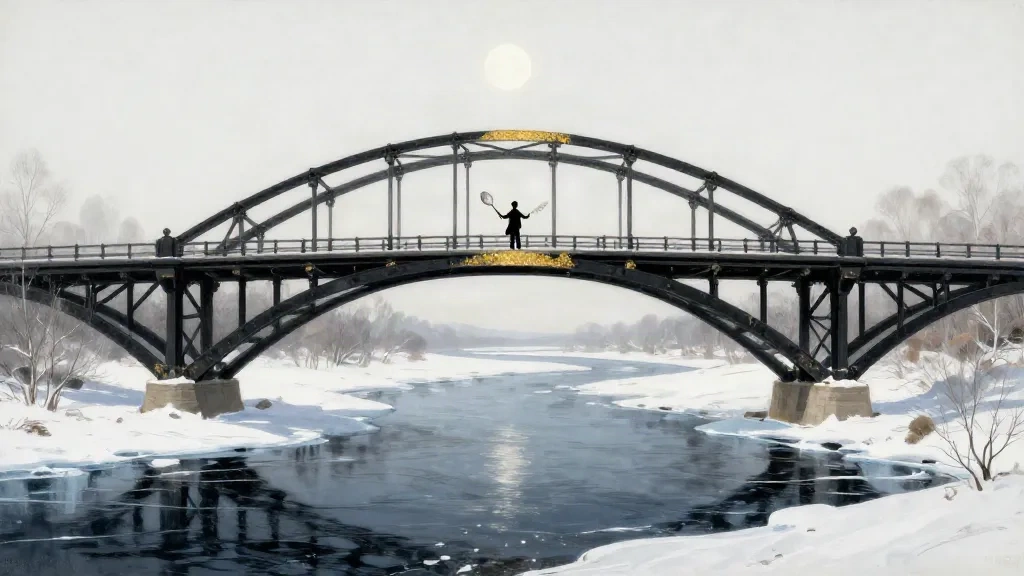
Every bridge in Bellwether was a promise made visible. Stone arches carried vows across the river; rope walks carried excuses; the narrow black-lacquer bridge at the edge of town carried the mayor's promise to mend the public clock before it lost a minute.
Mara Venn played a small brass flute beneath that bridge each evening. Her mother had taught her to listen for the note that appeared when someone spoke honestly. It was never the same note: a high silver flicker for a confession, a low golden thrum for a promise kept, a cold blue shiver for truth offered too late.
For seventeen years, Mara had heard nothing but small truths from her neighbors. Then, on the morning the river froze before sunrise, the old ferryman told her that the winter had begun because Bellwether had forgotten its first promise.
His confession made a white note in the air. Mara followed it to the riverbank.
The Spoon and the Feather
A white feather rested on the ice, immaculate despite the storm. Beside it lay a silver spoon, blackened at the handle. When Mara touched the spoon, she heard the town as it had been before the freeze: hammers, wedding bells, footsteps crossing bridges that were still new.
She wanted to build a bridge that would survive the storyteller.
Not the winter, she told herself, though the winter was the creature standing between her and morning. She meant the people who would tell the story after her. They would call the river cruel, the mayor faithless, the ferryman a foolish mouth. She wanted one thing to remain true beneath their telling.
So she gathered fallen beams, church nails, and strips of lacquered wood. She shaped each plank with the spoon, using the silver bowl to test whether the grain would bend. At night, the truth-notes gathered around her. The mayor confessed he had never repaired the clock. Children confessed they had hidden the ferryman's lantern. Mara's own father, arriving silently, confessed that he had left the town years ago because Bellwether's promises frightened him.
Each truth gave her a note, but the notes were no longer enough. The winter had grown a roof of black clouds, and the river's ice groaned beneath it.
The Generation of Snow
By the time Mara's bridge reached halfway across the river, the children had grown into adults. They remembered the freeze as a season, not a day. They built houses against the white feather and used the silver spoon to stir bitter porridge. The mayor's clock remained stopped.
Mara grew old beneath the unfinished arch. Her hair whitened beside the feather, which never melted. When a young bridgewright asked why she bothered, she answered, “Because the first promise was not the only bridge.”
That answer made a note so deep the ice cracked.
From the crack came the river's voice. It remembered the town's first promise: that no traveler would be left without a way home. The promise had not been broken by a single betrayal. It had been divided into thousands of small exceptions, until no bridge remained whole.
Mara understood then that a bridge could not be made from wood alone. It needed the consent of both banks.
The Story After the Story
She placed the white feather at the eastern end and the silver spoon at the western. In the moonlight, the spoon reflected cold silver, the feather glowed like a small moon, and gold dust from the old lacquer rose around the final joint.
“I promise no one will be left,” Mara said.
Her note was not high or low. It filled the valley, carrying the sound of every honest word she had ever heard.
People crossed first. Then they returned with blankets, tools, names. The old mayor carried the broken clock. The ferryman brought the lantern. One by one, they added pieces to the bridge until it reached the far bank.
Spring returned first as a thin green seam, then as wind, then as water. The white feather remained. The silver spoon remained. Neither became a relic. Travelers used them to mark the bridge at night: feather on the east, spoon on the west, a path no darkness could erase.
Years later, when a child asked who had built it, Bellwether gave different answers. Some said the mayor. Some said the ferryman. Some said the river itself.
Mara only smiled. She knew the truth would sound different in every telling, and that was the point. The bridge did not need one perfect story.
It only needed to keep carrying people home.





