 Netwrck
Speculative Fiction.
The Note Under the Frozen Road
In Bellwether, every bridge was built on a promise spoken aloud, and every river was sworn to witness it. The oldest bridge crossed the water on the words of a woman who had promised her drowning son would return. The newest joined two districts of the poor on the promise that neither would starve. When the promises failed, the bridges remained. The river remembered.
Elian Voss played a small brass horn in the market square, earning copper enough to keep his sister's kettle warm. He also heard what no one else heard: a clear, low note whenever someone spoke the truth. The note rose in his teeth and trembled there until he answered it on his horn.
For years, honesty had been a modest gift. A baker had confessed to shorting the loaves. A ferryman had admitted loving another man's wife. Elian turned each confession into a phrase of music, and the town learned to distrust the beauty of his playing.
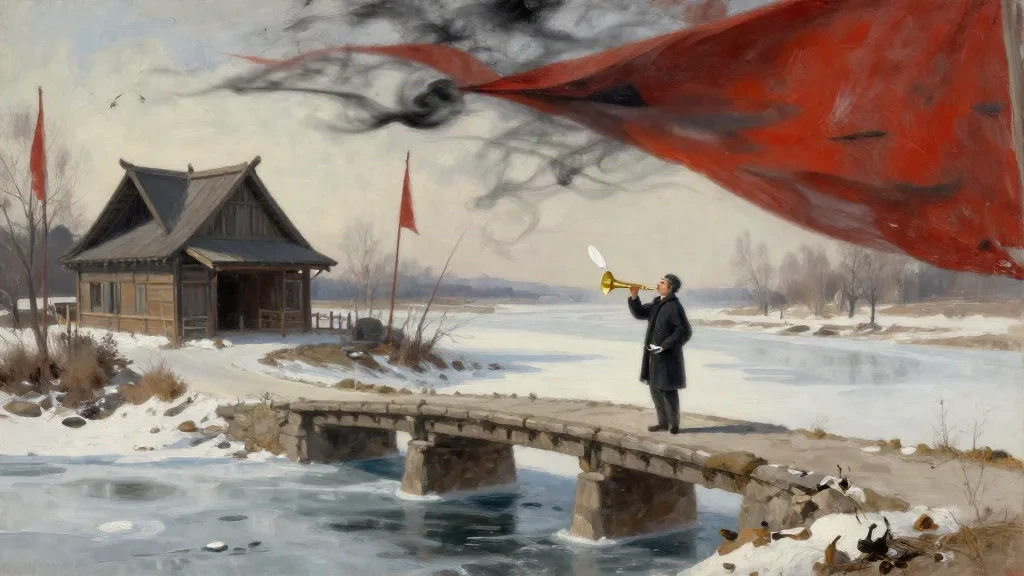
Then winter came. It did not thaw with spring. Snow thickened across the roads for seven long years, so long that the old people died before remembering the year it began. Every bridge held, but none would open. The river froze into a white floor, yet beneath it water continued moving, carrying pale fragments of things no one had lost.
What the River Returned
Elian wanted to build a place no lie could destroy. He imagined a hall raised above Bellwether, with beams cut from trees that had survived every winter and floors made from stones that had crossed honest water. In that hall, people could speak without fear. The truth would become architecture.
He asked the town for wood, iron, and silver. They gave him coins instead. The first winter generation called him a dreamer. The second, when the granaries emptied, they called him a thief. The third, their children began leaving by sled toward warmer valleys, and the town called him nothing at all.
At the center of his half-built hall stood a white feather, found in the river's ice. It belonged to no bird known in Bellwether. Beside it lay a silver spoon from a house abandoned before the winter. Elian kept them on a workbench, unsure why they seemed more honest than the tools surrounding them.
One night, a child named Senn crossed the frozen river and returned without speaking. Elian heard no truth-note from him. Yet the white feather lifted, and the silver spoon struck the workbench with a bright, questioning tone.
Elian followed Senn to the river. Beneath the ice, he found the old bridge with its promise cut into the stone: I WILL BRING HIM HOME. The river had been keeping the drowned boy all along, not as a ghost, but as a current unable to surrender what it had witnessed.
A Palace Against the Storyteller
The winter had lasted one generation because Bellwether had forgotten the story that ended it. Every retelling had changed the promise. Some said the son was lost. Some said the mother lied. The river, witness to all versions, could not release a promise no one would repeat exactly.
Elian played the only note he had ever heard from a lie. It was thin and sharp, cutting through the frozen silence. The sound embarrassed him, but it moved him toward a truth he had been avoiding: he had built the hall to make the town praise him after he was gone. He wanted something that would survive the storyteller, and he had mistaken being remembered for being right.
He climbed the unfinished bridge with the white feather in one hand and the silver spoon in the other. Below, the river pressed against the ice. Elian played the mother's promise in the exact cadence she had given it years ago, the cadence he had first heard from his sister's lips when she admitted they would never leave Bellwether.
The note of that truth filled the valley. Not triumph, not innocence. A promise made before hope had made it reasonable.
The Water Opens
The ice cracked. The river rose beneath the bridge and carried the drowned son toward the bank, not as a body, but as a warmth moving through cold water. The boy was old when he emerged, ancient and bewildered, yet the mother had been old too. They embraced without becoming young. That, the river had never promised.
By dawn, Bellwether's bridges stood open. The generation-long winter loosened, and grey water ran through channels that had been silent for decades. Elian's hall still had no roof, no finished walls, no fame. The town repaired it anyway.
He placed the white feather and silver spoon on its highest beam. Then he stopped composing monuments to the future. Every morning, he listened. Whenever the town told the truth, he played one note. Whenever it lied, he let the silence remain until someone found the courage to correct it.
Years later, children asked what the feather meant. Elian told them it was a thing the river had carried back. They asked about the spoon, and he said it had learned to ask questions. The real story was simpler, and harder: he had wanted a building that could outlive him, and discovered that a promise survives only while someone remains willing to speak it honestly.
The river went on witnessing. The bridge went on holding. And Elian played softly enough for the living to hear themselves.





