 Netwrck
Hopeful Science Fiction.
The Door Tree
Mara made lanterns for the paths people avoided. She gave them copper hooks, blue glass, and small flames that burned without smoke. The garden supplied the glass. It grew pale bulbs in its greenhouse branches, each one clouded like weather.
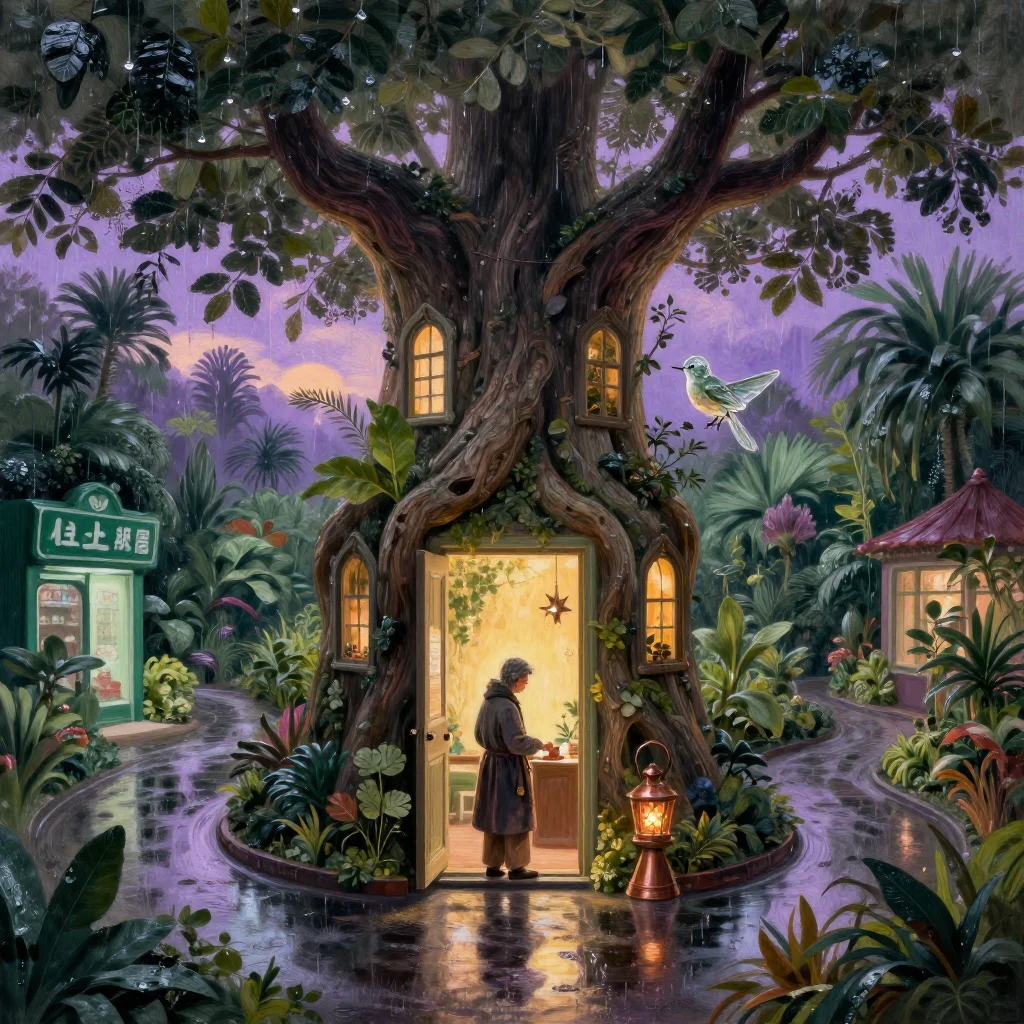
The tree stood at the garden’s center, its bark furrowed with knots shaped exactly like doorframes. Some opened onto a red field under a white sun. Others showed corridors, kitchens, snowy hills, or rooms where people waited with their coats already on.
Every morning, Mara arrived before the visitors and inspected the roots. The border lay beyond the eastern wall, where the garden ended and the country of Bellora began. A metal fence divided them, though the trees on both sides leaned toward one another as if sharing a secret.
In her coat pocket rested two objects. A copper star, worn smooth from her mother’s hand. A glass bird with one amber wing. They were the last things she had taken from the house at Thornmere before the soldiers came.
She had crossed every other gate in the garden, but not the border. Every route there required a declaration: name, purpose, possessions surrendered. The garden’s oldest keeper called it a courtesy.
“Memories are heavy,” he said. “The border keeps the roads from becoming cruel.”
Mara touched the copper star through the cloth. “Then I will carry them myself.”
The Bell Under the Leaves
At noon, the bell rang.
It hung nowhere visible, somewhere inside the tree. Its note was soft at first, then clear enough to shake dust from the leaves. The visitors stopped. A gardener dropped a trowel. A child with a red pin on his coat looked toward the eastern fence.
The bell rang only for decisions no one admitted making.
Mara knew because she had heard it once before, on the night the soldiers knocked down the door of her childhood home. Her mother had whispered, We are only passing through. The bell had sounded from somewhere beyond the river.
Now it rang again.
The keeper touched the tree. A narrow door opened in the trunk, its panels made of green bark. Through it came the smell of wet asphalt and lavender. A road waited on the other side, bordered by pharmacy signs glowing against the rain.
“You have chosen,” the keeper said.
“I have not.”
“You have always chosen. The difference is that this time the road noticed.”
Mara looked back. The lantern paths were crowded now with people who had come to see the door tree. They had followed her lanterns into the garden, pretending they had not been afraid.
She had wanted to give them light without asking them to move. Instead, the light had led them here.
What the Road Required
The keeper offered a bowl of black water. One drop would make the border forget what she carried. Not erase it. The distinction mattered. The memories would remain, but the road would no longer recognize them as proof that she had come from Thornmere.
Mara lifted the bowl. The copper star and glass bird pressed against her palm.
At the eastern fence, a girl in a yellow raincoat was trying to cross. Her mother held her back. The girl carried a paper package sealed with blue thread. The pharmacy signs beyond the fence shone green through the rain.
“If I forget what I carry,” Mara said, “will the border let her pass?”
The keeper shook his head. “It will let her pass if someone carries the weight openly.”
Mara understood then. The border did not demand surrender. It demanded witness.
She returned the bowl. Instead, she took out her lantern and set it on the ground. The copper star she fastened to its crown. The glass bird she placed beneath its handle, where the flame could shine through the amber wing.
When she stepped toward the fence, the bell rang again. This time, every person in the garden turned.
Mara raised one hand.
“I came from Thornmere,” she said. “I carried these things because I was afraid to put them down. I am not surrendering them. I am asking the road to carry them with me.”
The Door That Opened
The metal fence did not part. The tree did.
A door of leaves swung wide in the rain, its threshold bright as a window. Beyond it, the wet road curved toward Bellora. The pharmacy signs reflected in puddles: green, green, green.
The keeper stepped aside. The visitors watched Mara pass beneath the lanterns she had made for them.
She did not become lighter. The copper star still cut into her palm. The glass bird still trembled with the memory of her mother’s hands. But the weight no longer belonged to the road.
On the far side, the yellow-coated girl slipped through after her mother. Others followed, one by one, carrying their own parcels, letters, keys, and folded maps.
At the last, Mara looked back. The garden’s tree was closing its doors. In its bark, a small new frame appeared.
A border, she thought. Or the beginning of a gate.
Then the copper star caught the pharmacy light, and the glass bird’s amber wing glowed. Mara turned toward the road.
Somewhere ahead, a lantern had gone out.
She began walking.





