 Netwrck
Gothic Fantasy.
The Last White Lamp
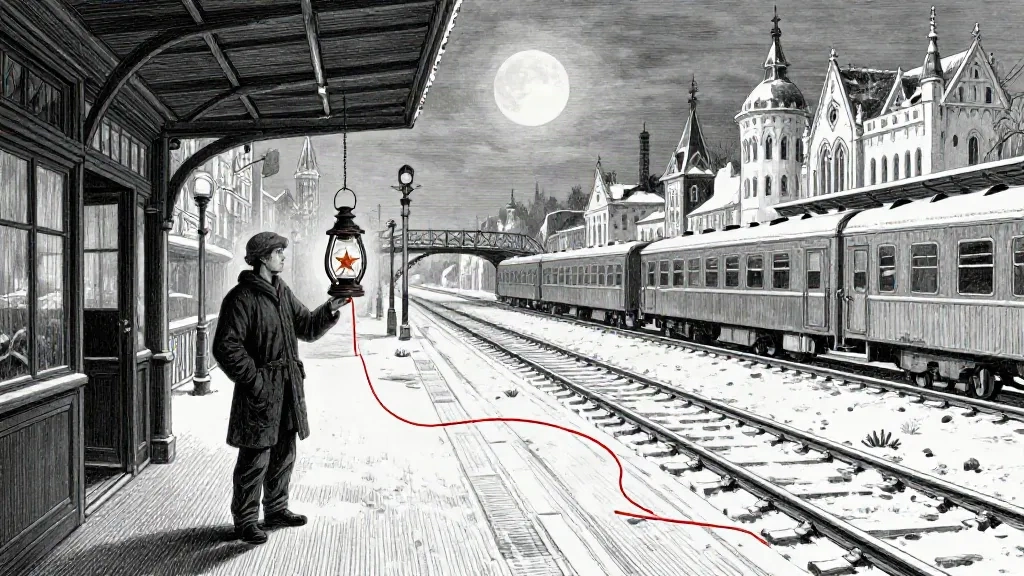
Maren made lanterns for paths people avoided. She set them in ditches beneath blind bridges, beside drowned culverts, and along the rails where winter snow erased the sleepers. Her glass was smoky, her wicks soaked in bitter oil, and her copper frames blackened with soot. Only the red thread wound around each handle could make a lantern answer darkness.
At Vesper Station, the lamps burned without fuel beneath a roof crusted with white coral. Frost glazed the departure boards. Black snow leaked through the rafters and vanished before reaching the floor. Tracks emerged from the tunnels, one branching north beneath plum orchards, another vanishing into white dunes, while a third followed a strip of scarlet thread across every wall.
Across the platform stood the Border Office.
Its windows were open, though winter pressed against them. The clerk beneath the arch examined no passports. He only weighed what travelers carried: a wedding ring, a swaddled child, a bundle of letters, a dead man’s watch.
“The border takes its price,” he said to Maren.
She held her lantern close. Inside its crooked panes, a copper star revolved around a tiny glass bird, each made by her own hands.
“Then I cannot cross.”
The clerk tilted his brass scale. “You have carried less than a bird. Yet your lantern is heavy.”
The Bell in the Empty Carriage
Maren had crossed before. She had left the northern border with only the memory of her mother’s face, surrendering every token from their shared house. To pass again, she must choose one object to abandon at the platform edge.
She placed the copper star on the clerk’s table. The scale rose.
“The star is not mine to surrender,” she said.
Then she offered the glass bird. It trembled as if wing against glass.
“That belonged to the child I could not save.”
Neither object touched the balance.
A carriage waited behind the office, black with hoarfrost. Its windows were amber, and the red thread tied to its front rail streamed toward a narrow signal bridge beyond the tracks.
Then the bell rang.
It was not the departure bell. It sounded inside the lantern, beneath the spinning star and glass bird, with one clear note that shook the soot from the copper frame.
Every other passenger turned away.
The bell rang only for decisions no one admitted making.
Maren remembered the night she had redirected the relief train. One locked medical wagon. One destination that should have remained closed. She had made the alteration with the bell cord in her hand, then denied it after the bodies were counted. The station had recorded her refusal where the tracks met the border.
A Season Without Arrival
“Boarding requires a season,” the clerk said.
“I did choose one.”
“You chose it twice.”
He struck the scale. Winter burst through the office windows. The platform vanished beneath snow, but the red thread remained visible, crossing the white like a scar.
Maren entered the carriage with the clerk’s last question at her back.
“Which life do you intend to cross as?”
The train moved. Outside, familiar landscapes flickered past: her workshop under a spring thunderstorm; the border road in dry autumn heat; a town where strangers called her by her mother’s name. Each season held a different Maren. Each carried a different claim upon her lantern.
At the final stop, an immigration officer raised a lantern of his own. Its glass held no star or bird, only a red thread tied in a knot.
“Declare what you carry,” he said.
“The memory of the choice.”
“Memories are surrendered freely.”
“No. I carry its living weight.”
She lifted the lantern. The copper star had stopped turning. The glass bird pressed its beak against the pane, looking toward the signal bridge.
The Thread Through the Door
Behind the immigration door, a final platform waited. Red thread stretched across its doors, rails, benches, and the lanterns hanging from the canopy. Maren stepped onto it carrying both objects.
The clerk called after her: “You cross without payment.”
“No,” she replied. “I cross having named the cost.”
Behind her, the summer she had chosen flickered out. The life in which the locked wagon arrived safely vanished from the carriage window. She bowed beneath the weight of the dead, but the lantern remained lit. The copper star held its orbit. The glass bird opened its wings within the glass.
At dawn, Maren reached the other side. The border there had no office, only a low wall threaded with red fiber and a field of unlit lanterns.
She began setting them alight.
No bell sounded. The station had finally heard what she was willing to admit: the decision was already hers, and the things she carried had survived it.





