 Netwrck
Speculative Fiction.
Discarded Endings
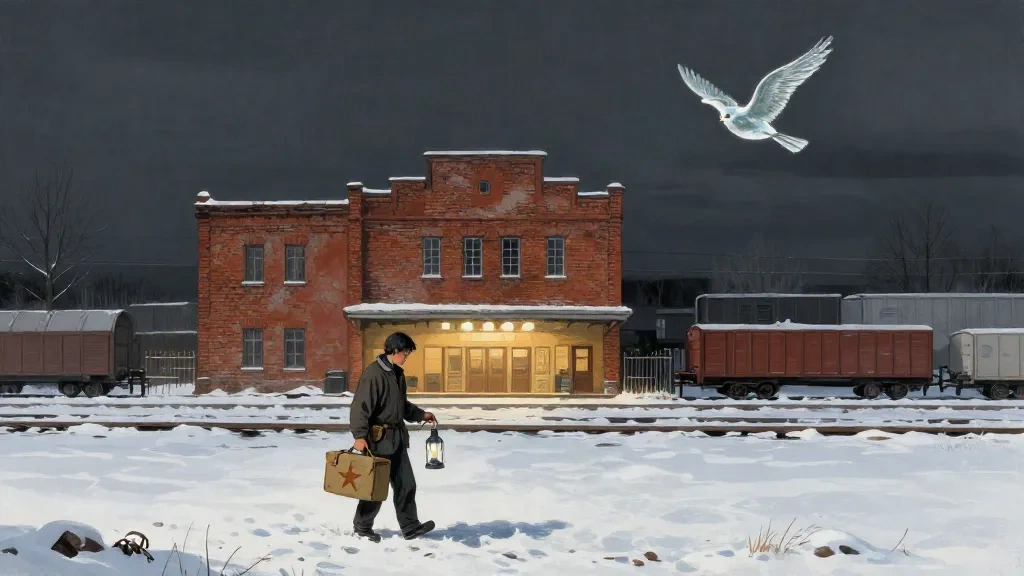
The theatre stood behind the freight yards, where rust-red brick faded into a charcoal sky. Every morning its doors opened on last night’s abandoned endings: a king who abdicated in the seventh act, a bride who boarded the wrong train, a child who opened the sealed door and then, at the last line, thought better of it.
Mara lit the copper star fixed to her lantern. Its six points reflected across the stage, pale as winter light on dirty ice.
She had come for a passage north. The border ran beyond the city, invisible and absolute, dividing admitted lives from those deemed improbable. Officials required travelers to surrender whatever could not be justified: a language, a surname, the memory of someone they had loved.
Mara had carried her mother’s tools in a canvas case. Hammer, tongs, half a tin of silvering. She would cross without surrendering them.
Behind her, stagehands rolled out the scenery for The Drowned Engineer. A river of black silk covered the floor. Small lamps floated above it.
“You are late,” said the theatre’s bellkeeper.
He stood beneath a glass bird hung from invisible wire. Its blue wings caught the work lamps and cast a small clean shadow.
“The ending you need has not been discarded yet.”
The Bell Beneath the Floor
He named the price. At midnight, Mara must choose one ending from the theatre’s store and make it hers. Once chosen, it would be performed. Once performed, it could no longer be changed.
She descended beneath the stage.
Endings hung there on wires, each written in silver ink across long paper strips. He forgot her face. She married the sea. The letter burned unread. The country survived. The papers stirred in the furnace draft, whispering against one another.
Near the furnace, the copper star on Mara’s lantern began to ring.
Not the theatre bell. A smaller bell, hidden beneath the boards.
“That one rings only for decisions no one admits making,” the bellkeeper said from the stairs.
Mara touched the nearest strip. The words changed: She crossed alone, keeping everything.
The theatre shuddered. Behind the brick wall, beyond the freight yards and the invisible border, dogs began to howl.
“That is not a discarded ending,” Mara said.
“Not yet.”
The Ending She Would Not Choose
At midnight, the lamps dimmed. The glass bird descended and landed on the paper Mara had touched. Its breast shone with cold blue light.
The bell rang.
Every performer stopped. The bellkeeper bowed his head.
“You decided to keep everything,” he said. “Even the life that happened if you failed.”
Mara understood.
The border did not merely inspect luggage. It divided existence into what a traveler had earned and what the world might quietly take away. Her tools proved her mother had taught her. The lantern proved she had made something useful. The glass bird in her pocket—her mother’s final gift—proved only that she had been loved. Love could not be entered at the crossing.
The furnace door glowed. One strip waited above the flames.
Mara took her father’s key from beneath her tongue. It was tiny, blackened with rust, and opened a house she had burned down before the border took her mother.
“That belonged to no one,” she said.
Then she dropped it into the fire.
The bell answered with a single, iron note.
The glass bird cracked from beak to tail. The copper star on the lantern flared once, then held steady.
Mara surrendered the shape of the bird, not the memory of it. The memory crossed with her, stubborn as a coal carried through snow.
What the Border Could Not Name
At dawn, she reached the northern crossing.
Her canvas case was heavier. The lantern cast its six-pointed light over the guard’s table, and inside the glass, where the bird had been, seven tiny stars now burned.
The guard pointed to them. “Unrecorded cargo.”
“They are light,” Mara said.
“Light has no border.”
“I do.”
She raised the lantern. Across the blackened threshold, a lamp in an abandoned watchtower answered. The border opened not as a gate, but as a line of winter brightness laid gently over the snow.
Mara crossed. Her tools struck against her hip. Nothing was taken.
Behind her, the guard picked up the theatre’s discarded ending from the register: She kept everything.
He struck the final clause from the paper.
Far away, beneath a stage where endings were rehearsed and forgotten, the forbidden bell remained silent. Some decisions were too costly to admit, and some crossings were made not by leaving the impossible behind, but by learning which part of it had never been yours to carry.





