 Netwrck
Historical Fantasy.
The Book of Departures
On the seventh winter of Sister Ilyra’s service, the comet monastery cast off another star and settled into its new orbit.
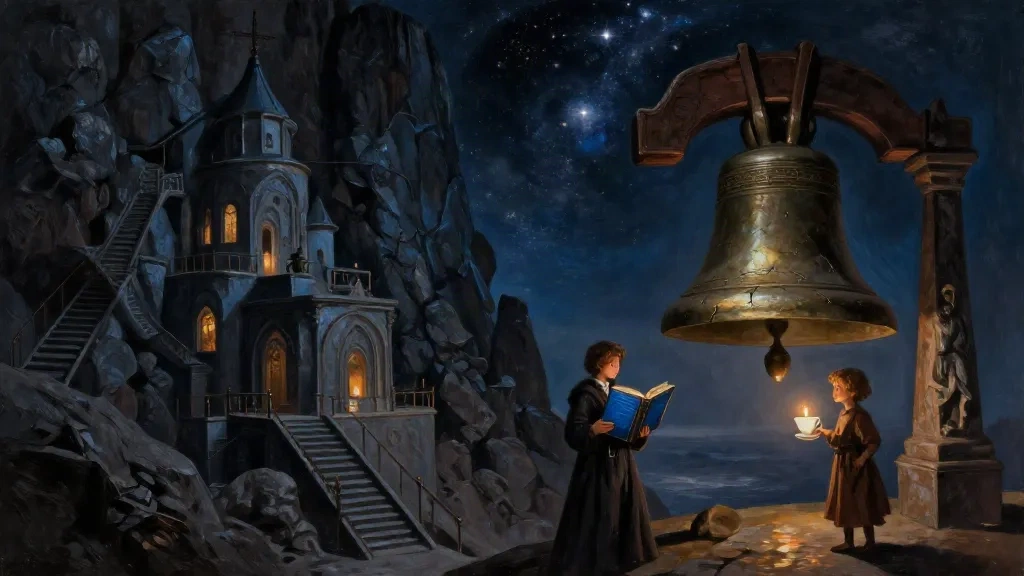
The monastery had no windows facing the inhabited heavens. Its chambers were cut from blue-black stone, its roof ribbed with veins of pale crystal. Iron stairs spiraled through the rock, and everywhere the walls bore the names of people who had arrived, departed, or been refused entry. The newest name was scratched into soot beneath the bell chamber: Orren Vale, who asked for a bed and was denied.
Ilyra was not a novice. She was the librarian, keeper of the book that refused duplication.
It had appeared in a locked chest during the monastery’s founding, bound in steel-blue cloth with no title on its spine. Whoever opened it found a different chapter. A shipbuilder read the history of a city built underwater. A dying queen found the confession of her murderer. A child found instructions for folding paper into a bird that remembered every person who had ever loved him.
The abbot forbade its use. He called it a dangerous door. Ilyra called it an answer.
Every traveler who came to the monastery asked for shelter, but most were told the same thing: they had brought a burden, a contradiction, a life too strange for the order’s rules. Ilyra listened at the doorway while the bells shook dust from the rafters. She lent them the book. She watched their faces change. Then she sent them away with the answer they needed, if not the home they wanted.
What the Child Saw
The empty teacup waited on Ilyra’s desk each morning. It had belonged to Brother Tomas, who vanished during the winter storm. He had left no body, only the cup, a ring of tobacco-brown tea, and a sentence in the margin of a prayer book: Do not let them ring me.
On the night the child arrived, the cracked bell sounded without moving.
Her name was Nera. She was wrapped in a man’s coat and carried a glass jar containing a black feather. The gate guard wanted to send her away. Nera pointed behind him.
“He is still there.”
The guard turned. The courtyard was empty except for snow and the crooked shadow of the bell tower. Nera looked at Ilyra.
“The man beneath the bell. Everyone agreed he is gone, but he is still there.”
Ilyra took the book from its chest. When she opened it, the pages were blank.
“Have you read it?” she asked.
“No. It has not been borrowed yet.”
“That is impossible.”
“You lend the same book to different people,” Nera said. “The man beneath the bell lent it to himself.”
Ilyra looked through the doorway. In the blue dusk, the tower’s cracked bell cast a second shadow across the snow. The shadow had a man’s shoulders.
A House With More Than One Door
That night they descended into the bell chamber. The air smelled of iron, cold wax, and old tobacco. Ilyra carried candlelight in a steel lantern. Nera carried the empty teacup.
Tomas lay beneath the bell, frozen upright against the stone. His eyes were open. His hand rested on a book that was not the impossible one. It was thin, black, and bound with a strip of red wool.
“He came asking for a home,” Nera said.
Ilyra understood then. The monastery had not refused Tomas because he was dangerous. It had refused him because he had found the hidden compact: the monastery admitted only residents whose truths could be agreed upon. Once everyone agreed to overlook an impossibility, the overlooker became dangerous.
She opened the impossible book. New writing appeared in candlelight reflected across the page.
A house may accept what it cannot explain.
Ilyra read the words aloud. The bell trembled. Tomas drew one breath, shallow and rattling. Above them, the monastery’s stone ribs shifted with a sound like a star cracking.
“I can bring him back,” Nera said, “but the bell must break completely.”
Ilyra looked at the crack running through bronze. The bell had warned the monastery for generations. Its incomplete note had kept the hidden residents in place: the erased, the unwanted, the living things the order had learned not to name.
“If it breaks,” Ilyra said, “we cannot control what answers.”
Tomas’s hand closed around the black book.
“I did not come here to control it,” he whispered.
The New Register
At dawn, Ilyra struck the bell with the iron stair rail.
The crack opened from lip to waist. A single note filled the comet, deeper than any bell should sound. Through the stone came footsteps, whispered names, and the bright confusion of stars.
Nera held the empty teacup. The moment the note ended, light appeared inside it: reflected candlelight, though no candle burned. The cup became a room, then a doorway, then a small house with many chimneys.
People emerged from the passage beneath the monastery. They carried the shapes of their hidden lives: a woman with two shadows, a man whose age changed when he moved, a boy born from a story no one had finished. Behind them came others who had been merely overlooked.
Ilyra opened the impossible book. This time every page held the same sentence.
Home is not the place that accepts you despite what you are. It is the place that makes room before asking your name.
The abbot stood in the doorway, furious and pale. Ilyra set the book before him.
“Lend this to anyone who arrives,” she said. “Do not decide for them what can be carried.”
By evening, a new list had begun beneath the chapel candle. Nera wrote the names in careful letters. Tomas poured tea into the empty cup, and this time it stayed filled.
When the comet monastery later turned toward the winter dark, travelers reported seeing a small steel-blue light among its windows. Some heard a cracked bell ringing beneath the stars. Others found a cup waiting on the table, empty, warm, and ready to be filled.





