 Netwrck
Speculative Fiction.
The Monastery of Uneven Hours
At the monastery of clockmakers, the clocks disagreed so thoroughly that the cooks had abandoned breakfast. One showed dawn while the kitchen remained blue with night. Another chimed noon beneath a ceiling of rust-red clouds. The young apprentices adjusted them with private rituals, scraping away numbers, replacing hands with knives, turning bells facedown.
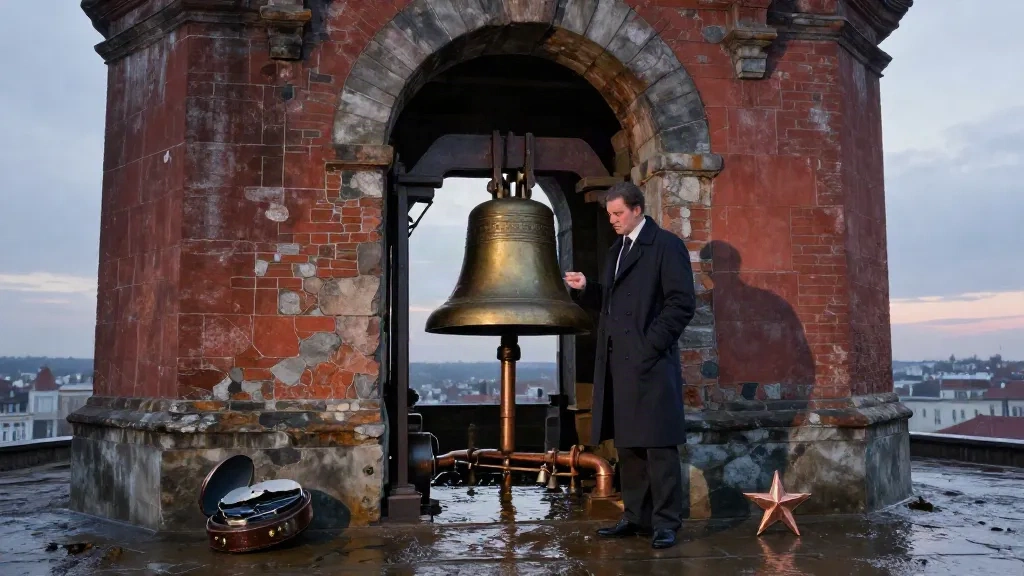
Dr. Mara Venn arrived carrying a black medical case and a music box with a cracked lid. Inside the box, a tiny ballerina turned forever, her raised arm fixed at the height of a salute. The copper star hanging from her wrist had lost one point.
“Homesickness,” Mara told the monastery’s prior. “All the same complaint, different countries.”
She treated it in a south-facing room where the windows faced no road. Her cures were not medicines. She asked each patient to describe the room they missed exactly: the squeak of the third stair, the blue bowl on the dresser, the smell of rain in a particular kitchen. Then she built that room inside a small copper frame. The patient slept beside it. In the morning, the absence had loosened enough to leave.
The prior had called her because the monastery's newest machine was making patients worse.
The Beautiful Machine
It occupied the old bell tower, all brass ribs and white enamel dials. At its center was a mechanism the master clockmakers had called the Civic Engine. Once connected to buried relays, it would send the same hour to every town in the country. No farmer would wake to a neighbor’s noon. No soldier would receive yesterday’s signal. No door would open onto darkness because its clock had failed.
But the machine did not merely tell time. It predicted return. It calculated which travelers were overdue, which children had left home, which hearts were most likely to turn back. Then it opened the gates of the nearest refuge and kept them open.
Mara saw the patients gathered beneath its dials, waiting for voices from rooms that no longer existed. One woman pressed both hands to a listening horn. A boy had brought his mother’s chair and sat beside it, refusing to leave. The prior said the machine was beautiful.
Mara understood the danger. A beautiful prison is difficult to oppose when it offers precisely what the lost want.
What the Water Found
On the third night of rain, the river rose through the monastery crypt.
Water entered the foundations with the patience of a creditor. It loosened a stone from the eastern wall and continued downward, exposing a copper channel beneath the monastery. Beside it lay a municipal project older than the monastery itself: a network of pipes and signal towers designed to move messages through every settlement. The towers had been buried during a war, their official records destroyed, but the machinery remained.
The flood filled the channels. A hundred hidden bells rang beneath the floor.
People rushed to the tower. The machine chimed at once, twelve false hours, each promising a different reunion. The listening horn filled with competing voices. The boy pulled his mother’s chair toward the stairs.
Mara climbed the tower and opened the music box. Its ballerina turned beneath the pale winter light, the copper star flashing between the machine’s teeth. The machine tried to correct her rhythm. It classified her as lost, then beloved, then dangerous.
She struck the machine’s central bell with a clockmaker’s hammer. The sound broke every synchronized hand at once.
The tower went silent. In the absence, the buried bells continued. Their tones were uneven, distant, humanly imperfect. One answered from the valley. Another returned from the flooded town. People began sorting them by memory rather than mechanism.
The Hour We Keep
Dawn came gray through the broken wall. Mara descended among the wet stones. The boy sat beside his mother’s chair, listening to a bell that had sounded from somewhere beyond the monastery.
“Is it really them?” he asked.
“It is a sound,” Mara said. “You choose what it means.”
They repaired the civic network by hand, connecting each tower to the next with rope, copper, and listening wires. The country would receive no universal hour. Every settlement kept its own. Travelers carried the bells’ timings in small boxes. The music box lost its final tune, but the copper star remained.
At sunset, Mara placed the star on the threshold of her treatment room. It held the pale winter light instead of reflecting it. Some nights it looked newly minted. Some nights it looked carried.
She left the monastery without restoring the machine. Behind her, the clocks continued their disagreements, and the people learned to listen past them.





