 Netwrck
Mystery.
The Book That Changed Hands
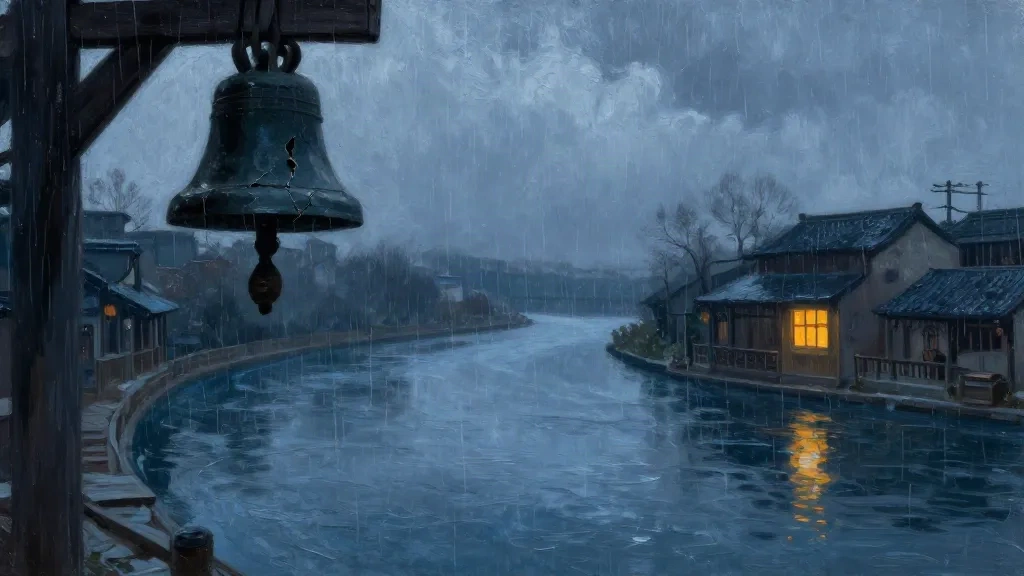
Mara had learned the town by its lending records. Every morning she unlocked the library beside the rain-silver river and counted what had been borrowed: umbrellas, salt, fishing boots, a silver button, one map of a country no cartographer admitted existed. At noon she stamped the overdue cards. At dusk she set an empty teacup on the windowsill beside the cracked bell, though no one had rung the bell in living memory.
Her desire was modest enough to confess. She wanted a home where impossible residents were allowed to stay. She had lived above the stacks for eleven years, paying rent in repaired hinges and stories, but she was still a guest in her own rooms. Every night she dreamed of a front door that opened without asking her to explain where she had come from.
The book arrived in winter inside a waterproof parcel addressed to no one. Its cover was ink blue, its pages smelled of rain on warm stone, and its title had been scraped away. When Mara opened it, she found a list of names followed by a single sentence: This is not a story. Do not let the town agree it away.
She should have reported the parcel to the mayor. Instead she shelved it.
What the River Carried
First she lent it to Niko, a ferryman who claimed the river had grown a second mouth. Then to Dr. Pell, who wanted to know why her patients dreamed in a language she could not translate. Then to Ilya, who swore the bridge had a shadow on the wrong side. They returned the book changed. The empty teacup gained a warm ring. The cracked bell began humming beneath the floorboards.
At midnight, the river changed direction.
People looked from their porches as the current reversed, carrying leaves upstream and silver ripples toward the sea. Most saw only a strange current. A few saw the drowned orchard rise from the water, its branches heavy with lanterns. One man saw a woman standing on the far bank, waving.
Everyone agreed not to mention her.
Mara felt the agreement settle over the town like a second roof. The ferryman developed a memory of crossing alone. The doctor called her visions headaches. Ilya painted the bridge’s shadow where it belonged.
Only Niko’s daughter, a child of seven named Sen, kept asking who was standing in the water.
“You said there was no one,” the girl told Mara. “But she is crying.”
Mara opened the book. A new line had appeared in its blank margin: Agreement is a kind of flood. It rises over what nobody wants to carry.
The Agreement Broken
At the next midnight, Sen climbed onto the library roof and rang the cracked bell.
The sound did not travel outward. It sank into the river, then climbed through the town’s foundations. Windows brightened amber, one by one, each holding a person who had vanished that winter. The drowned orchard unfolded its branches. On the far bank, the woman raised both hands.
Mara climbed down and found the town gathered at the bridge. No one asked Sen to stop ringing. The mayor, pale beneath his official coat, confessed that the river had once accepted the town’s dead. Since then, every impossible crossing had been erased by unanimous consent.
“We thought forgetting protected us,” he said.
“It only made the water lonely,” Mara answered.
She opened the impossible book and read the first name. The empty teacup filled with dark tea. The cracked bell shone like a small moon. The woman on the far bank began walking toward the bridge, and the people behind Mara stepped aside.
Mara understood then that a home was not a place without monsters. It was a place where the monster could knock.
One Warm Window
By dawn, the river had returned to its proper course. The drowned orchard was gone, the bridge shadow rested beneath the bridge, and the town had lost no one who had been living there before.
But the impossible residents remained. They lodged in spare rooms, repaired roofs, and worked at the library under Mara’s strict borrowing rules. Sen received a key of her own. The cracked bell was mended and hung above the door, where its single clear note marked the hour when no agreement could survive.
On the first morning, Mara poured tea into the empty teacup. Across the river, an amber window shone in a house that had not been there before.
She opened the library and waited for someone to come home.





