 Netwrck
Magical Realism.
The Courtyard of Small Repairs
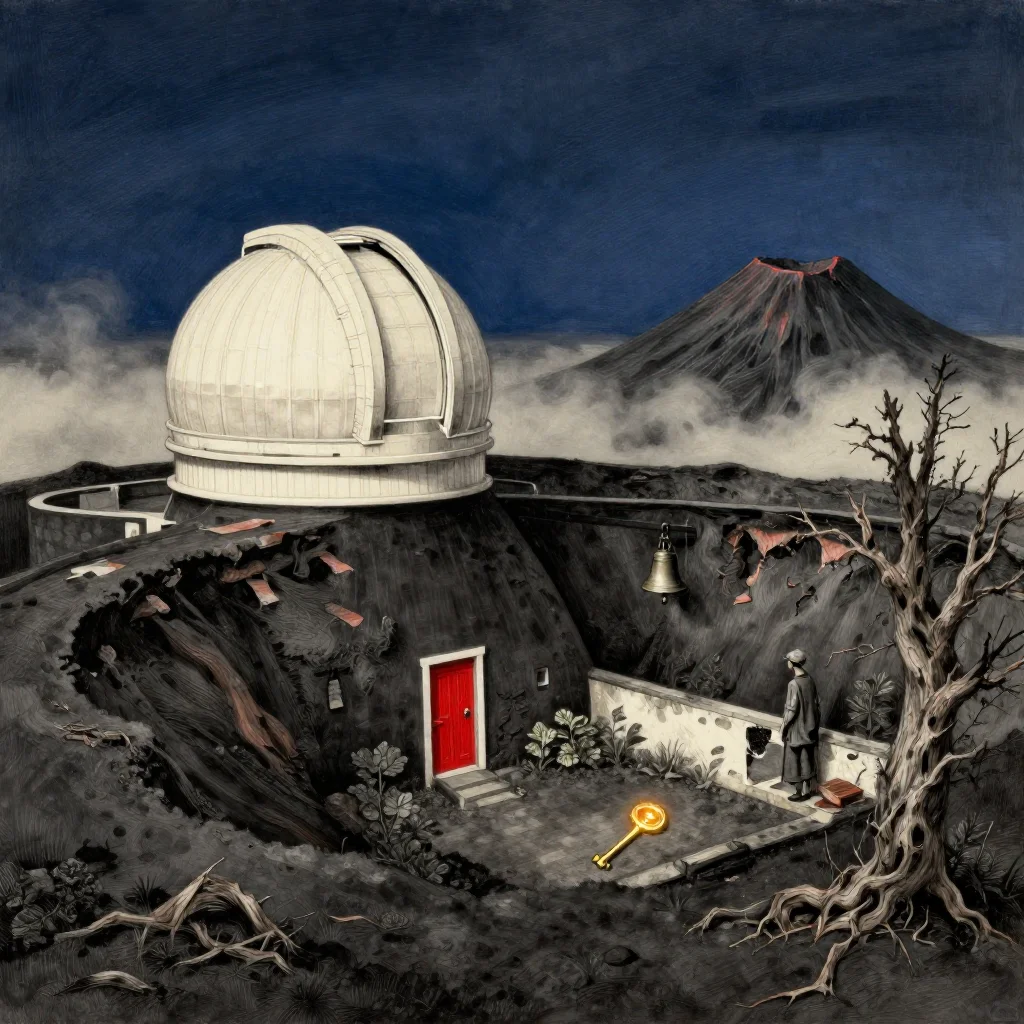
High on the shoulder of Sleeping Vell, the municipal observatory had been cut into the volcano’s black throat by engineers who called the project temporary. The dome was pearl-white, the instruments green with volcanic dust, and the stairways filled with the warm mineral smell of rain caught underground.
Below it waited the neglected courtyards: a checkerboard of broken tiles, thorned citrus trees, and walls where old tenants had pencited the heights of their children. Every spring, the city sent Mara Vale, municipal gardener, to plant something green in the ruins before the summer tourists arrived.
She carried stories in her coat pockets. Not books. Fragments pressed between leaves: a woman’s account of a brother who returned from the sea with salt in his shoes; a child’s memory of laughing beneath a kitchen table; a retired engineer’s confession that the mountain had spoken to him once, in a voice like a spoon in a cup.
Mara planted them beside the roots of neglected trees. She watered the soil with the city’s spare rainwater and waited.
The Machine of Disbelief
On the eastern wall, beneath a streak of midnight blue, she found a machine the size of a grandfather clock. Its brass face had one keyhole and three words engraved around the dial: ONLY WHEN NOBODY BELIEVES.
Mara tried it that evening. Nothing happened.
The gardener tried the next night. The machine coughed out a puff of ash and produced a cracked bell, no larger than a plum. She carried it back to her room, intending to use it as a flowerpot.
When she told the observatory’s caretaker that the bell had appeared inside the machine, the bell vanished. It returned only after he had stopped laughing and declared it a clockwork trick.
So Mara began concealing her discoveries. She lied to the caretaker about smoke in the vents, to the cook about footprints in the ash, to the village below about the warmth spreading beneath the observatory. The machine responded to every denial. Each impossible thing became possible when she refused to admire it.
Her own family story was the last she planted. It concerned her father, who had left the mountain after a landslide and returned years later with a brass key polished by the sea. He had never explained what it opened. Before he died, he told Mara that a true shelter is not a place where everyone is known, but a place where everyone may arrive.
She buried the story beneath a courtyard tree. The next morning, a stone bench stood where no bench had been. Behind it rose a low wall, pearl-colored and warm as bread, with a single red door.
What the Strangers Brought
People began arriving. A woman fleeing a flooded valley. Two brothers who had not spoken in eleven years. A courier carrying seeds in a tin box. They brought furniture, blankets, jars of plum jam, and stories no one had requested.
Inside, no one knew anyone else’s name. The rooms arranged themselves around their needs: a kitchen for the cook, a bath for the exhausted, a long table for the lonely. The cracked bell sounded whenever someone tried to leave, not to punish them, but to remind them of the door they had chosen.
Mara wanted to preserve the place. She repaired its walls, polished its windows, introduced the visitors to one another, and began keeping records of every gift. The shelter grew crowded with explanations.
Then the machine stopped.
No matter how carefully Mara lied, the mechanism remained silent. The red door wouldn’t open. Dust gathered on the bell. By the third night, the shelter had become a waiting room, and the waiting room had become a prison.
The Empty Room
Mara climbed through the observatory’s western passage and found the machine behind the old telescope. Its brass face was warm. The keyhole held the sea-polished brass key from her father’s story.
She understood then what the machine required. The shelter could survive only as long as no one insisted it was inevitable.
At dawn, Mara opened the red door and told the room the truth: she did not know whether it would remain. The strangers listened. Some left. Others stayed, not because they believed in the walls, but because they were willing to make a place together.
She turned the key. The machine stayed silent. A crack opened across the volcano’s midnight-blue night, and a single star appeared where no star had been visible before.
The cracked bell rang once, far below. By morning, the courtyard was empty, the pearled wall had vanished, and the red door lay flat in the soil.
Mara kept the brass key. She also planted her father’s story in the ground, where nobody could prove it had been there. The next spring, a stranger found shelter under a thorned citrus tree, beneath a sky the color of a pearl held up to the sun.
Some doors are built by hands. Others are built by leaving them open.





